
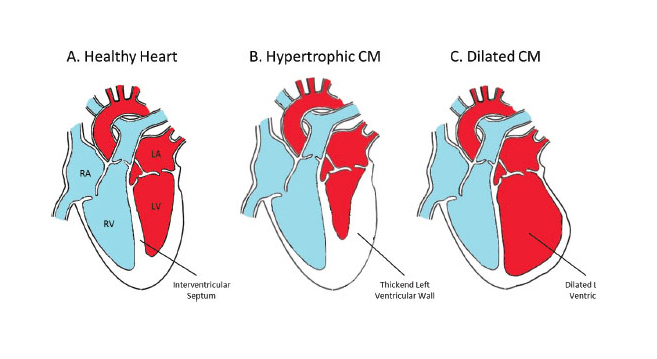
Cardiomyopathy is a disease of the heart muscle that may becomes stretched (enlarged) or abnormally thick or rigid. Sometimes extensive scarring occurs.
There are three types of cardiomyopathy:
The terms Systolic or Diastolic dysfunction are often used to describe where in your heart cycle this occurs:
A dilated cardiomyopathy can be inherited or caused by a variety of diseases that include :
- Coronary artery disease and previous heart attacks (ischemic cardiomyopathy)
- Infections, especially viral infections that cause the heart muscle to become inflamed (myocarditis)
- Alcohol, especially when a person has a poor diet (alcoholic cardiomyopathy)
- Complications during the last month of pregnancy or within 5 months of birth (peripartum cardiomyopathy)
- Certain drugs, such as cocaine, amphetamines, and some cancer medications
- Diseases such as diabetes and thyroid disease
A hypertrophic cardiomyopathy can also be inherited, but it usually is the result of long-standing high blood pressure.
Restrictive cardiomyopathy may occur as a result of:
- Hemochromatosis, a condition in which too much iron is deposited into tissues, including heart tissue
- Amyloidosis, a disease in which abnormal proteins are deposited into heart tissue
- Sarcoidosis, a disease in which inflammation produces tiny lumps of cells in various organs in the body, including the heart
- Connective tissue disorders
Not everyone with cardiomyopathy needs treatment and some patients recover on their own. Patients without symptoms may not need treatment.
For symptoms, diagnosis and treatment, please refer to the section on heart failure.
Comments 1
Pingback: Broken Heart Syndrome - Cardiac Health